15 kWh home batteries you connect yourself
The 15 kWh home batteries at TechPunt are systems you connect yourself, without an installer and without a separate high-voltage inverter. Within our range of home batteries this is the capacity for heavy users: every configuration here delivers at least 15 kWh and up to well over 17 kWh.
With the systems we carry, you reach 15 kWh by combining a main unit with expansion batteries. There are two ways to build up that capacity, and they differ mainly in power output and in the room you have left afterwards.
15 kWh in three blocks of 5 kWh
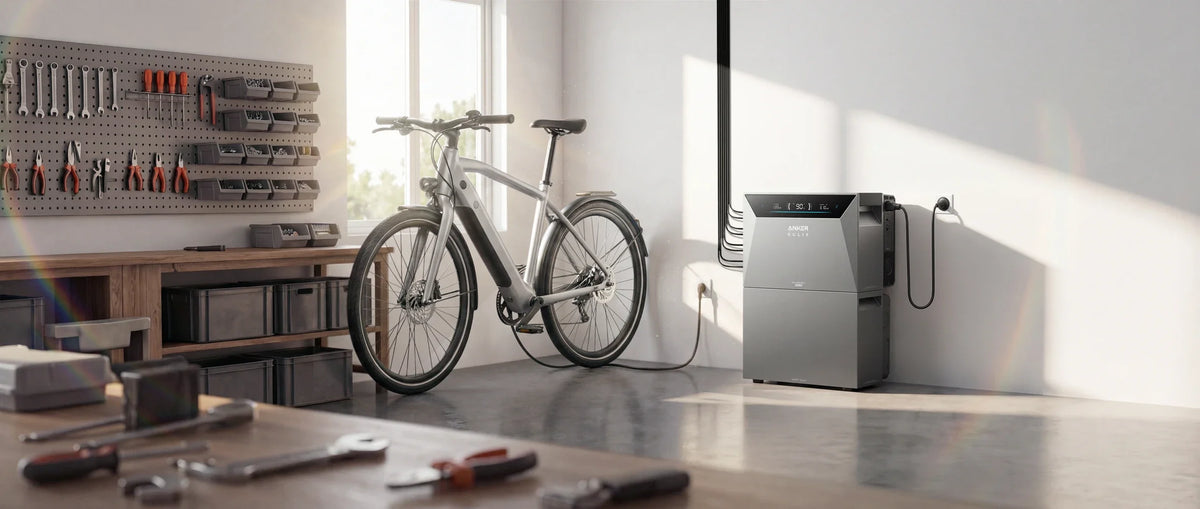
A 15 kWh system in three blocks of 5 kWh consists of the Anker SOLIX Solarbank 4 E5000 Pro with two BP5000 expansion batteries.
The main unit has 5 kWh on board itself, four inputs for solar panels, and delivers up to 2,500 watts to your home. With three equal blocks you get a tidy stack, and the main unit can keep growing afterwards.
15 kWh in five or six batteries of 2.88 kWh
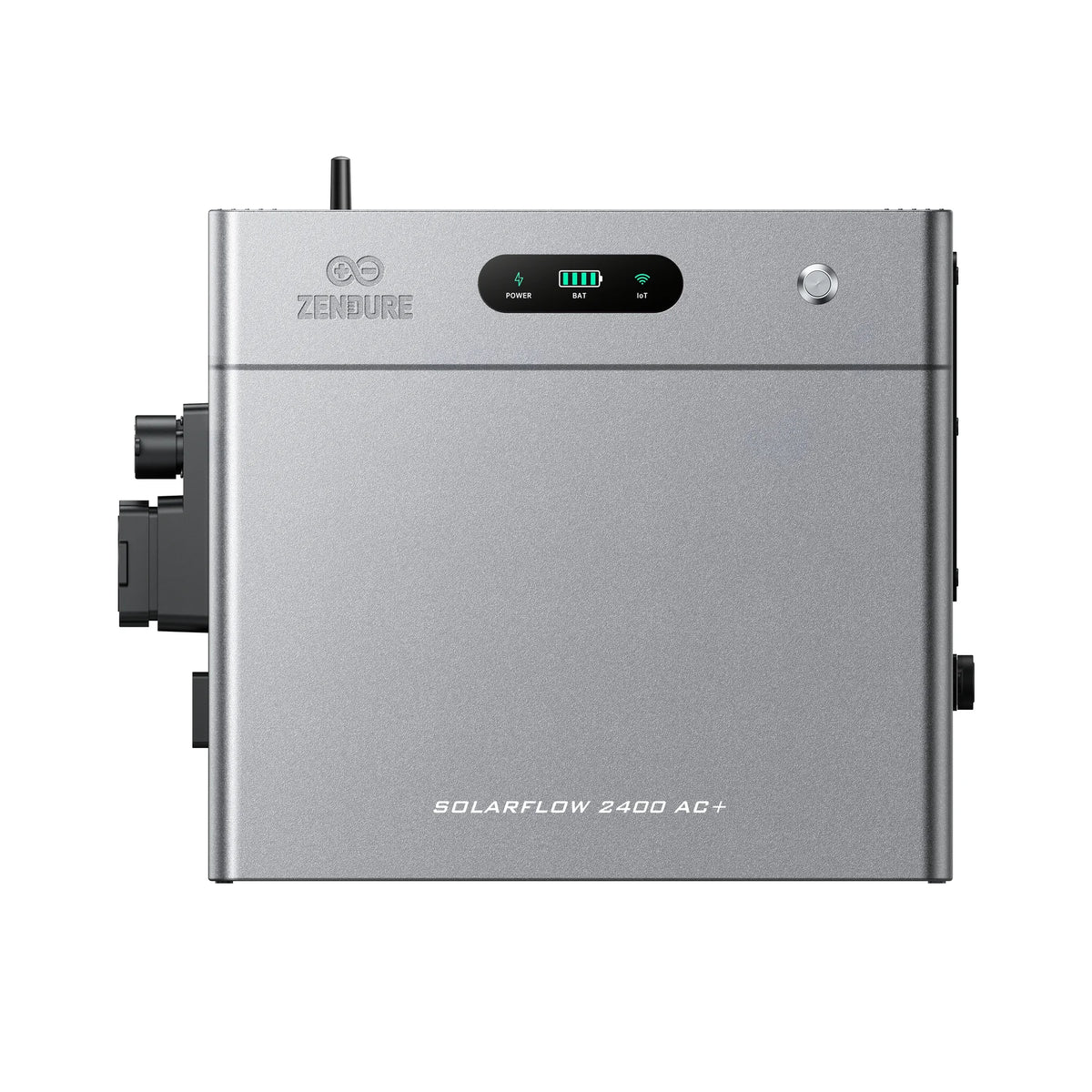
You build a 15 kWh system with five or six batteries of 2.88 kWh using the Zendure SolarFlow 2400 series. The SolarFlow 2400 AC+ and 2400 Pro have 2.4 kWh themselves and, with five AB3000L batteries, reach 16.8 kWh.
The SolarFlow 2400 AC has no battery of its own and, with six AB3000X batteries, reaches 17.28 kWh. All three deliver up to 2,400 watts, and the AC variants work behind the inverter of your existing solar panels.
Why do people choose a 15 kWh home battery?
People choose a 15 kWh home battery because they use more power after sunset than a smaller battery can cover. With this capacity, you get more out of your own solar power and out of the cheap hours on the grid:
- The whole evening and night on your own power: even when the heat pump, the induction hob and the tumble dryer are running after sunset.
- Capture more surplus: a large roof produces more on sunny days than a 5 or 10 kWh battery can store.
- Charge during cheap hours: with a dynamic energy contract, you charge when the electricity price is low and use that power during the pricey evening peak.
- Less feeding back to the grid after 2027: without net metering, every kWh you use yourself is worth more than a kWh you feed back.
- Room for a heat pump or electric car: you buy the capacity now and don't have to invest again as your consumption grows.
- Connect it yourself: the system works right away through a power outlet, and for more power you can later choose a fixed connection.
So the benefit of 15 kWh isn't in the number itself, but in the hours you bridge with it. The larger the share of your consumption after sunset, the more that extra storage pays off.
Which household needs a 15 kWh home battery?
A 15 kWh home battery suits households with an annual consumption from roughly 4,500 to 6,000 kWh, often a family of four or more in a home with a heat pump, an electric car or both. More important than annual consumption is what you use after sunset.
If that's structurally above 10 kWh, a smaller battery runs empty too early every evening. You can find your evening consumption in your energy supplier's app or in your smart meter portal.
Add up the consumption from sunset to the next morning for a week and you'll see right away whether 15 kWh suits you. Still unsure about the capacity? Then first read which home battery you need.
What can you run on 15 kWh?
On 15 kWh you can get a household with a heat pump through a full evening and night: lighting, cooking, TV, the fridge and usually also the heat pump that keeps the home at temperature overnight.
If you charge an electric car with it, that adds roughly 75 to 90 kilometres to the battery. How many appliances can run at the same time isn't determined by the capacity but by the system's power output.
Why 15 kWh instead of 10 kWh?
You choose 15 kWh instead of 10 kWh when a 10 kWh battery is already empty before bedtime on normal evenings, for example because the heat pump and cooking happen at the same time
With these systems the difference is one or two extra batteries, so it's mainly a matter of maths: if you use that extra 5 kWh almost every day, then 15 kWh is the logical size. If there's regularly power left over in the morning, then a home battery 10 kWh.
Charge and discharge power of a 15 kWh battery
The charge and discharge power of a 15 kWh battery determines how quickly the stored electricity goes in and out, and at this capacity that matters just as much as the number of kWh. Via a regular wall socket the power is capped at 800 watts.
A full 15 kWh then takes almost 19 hours to run empty, longer than an evening and a night combined. With a fixed connection on its own circuit, for example via a Wieland socket or fixed wiring, a 15 kWh system from Zendure delivers up to 2,400 watts and the system from Anker up to 2,500 watts.
The battery then runs empty in six to seven hours, exactly the window of evening and night. If you really want to make the most of 15 kWh, count on a fixed connection that an installer sets up for you. With just a plug you're paying for capacity you don't use every day.
How many solar panels do you need for a 15 kWh battery?
For a 15 kWh battery you need about 10,000 watt-peak of solar panels to fill it up on a sunny day, roughly 25 panels of 400 watt-peak. That ratio follows from the rule of thumb of about 1.5 kWh of storage per 1,000 watt-peak.
Most roofs have fewer panels, and that doesn't have to be a problem. With fewer panels the battery can still fill up on sunny summer days, but in winter you won't manage that with solar power alone.
That's why it's best to combine 15 kWh with a dynamic contract, so you can charge up during cheap hours in the dark months. This is becoming more important now that the net metering scheme (salderingsregeling) ends on 1 January 2027 and you'll receive at least half of the bare supply rate for electricity fed back until 2030.
Expandability of a 15 kWh battery
The expandability of a 15 kWh battery varies greatly from system to system, and at this capacity that's an important choice to consider. On Anker's Solarbank 4 E5000 Pro you can connect up to five BP5000 batteries, allowing you to grow from 15 kWh to 30 kWh.
At 16.8 or 17.28 kWh, Zendure's SolarFlow 2400 series is already at the maximum the main unit can handle. An extra battery does add capacity, but no power: after an expansion the system delivers the same number of watts as before.
What's more, expansion batteries only fit main units from the same series. If you expect your consumption to keep growing, choose a modular home battery with room above 15 kWh.
Buy a 15 kWh home battery
You can buy a 15 kWh home battery at TechPunt from Anker SOLIX and Zendure, as a complete set of main unit and expansion batteries. Because you connect these systems yourself, you don't pay for an installer or a separate inverter for the basic connection.
So compare the price of a 15 kWh home battery per kWh of storage and also look at the power. Want to know what a home battery costs and which items count, then read all about it in our explainer.
If your set is in stock, we'll ship it from our own warehouse in Barneveld. Order on a working day before 8:00 PM and it will usually be at your door the next working day, with a 2-year warranty, 14-day return policy and free shipping in the Netherlands and Belgium from 75 euros.
Torn between the three-block setup or separate batteries? Ask your question by phone, email or WhatsApp, and we'll help you figure out the setup that suits your consumption.