



What is a Zendure home battery?
A Zendure home battery is an energy storage system that you can connect to solar panels or the power grid to store energy for later use. The system consists of one or more battery modules combined with an inverter or energy management system. During the day, when your solar panels generate more than you use directly, the home battery stores the surplus power. When demand rises, or when the sun isn't shining, the home battery delivers that stored power straight to your household.
Zendure systems feature intelligent control and an integrated battery management system that monitors the temperature and optimizes performance. Through a dedicated app, you can easily keep an eye on your usage, storage and efficiency, so you always have insight into the flow of energy within your home.
Zendure's best-selling home batteries
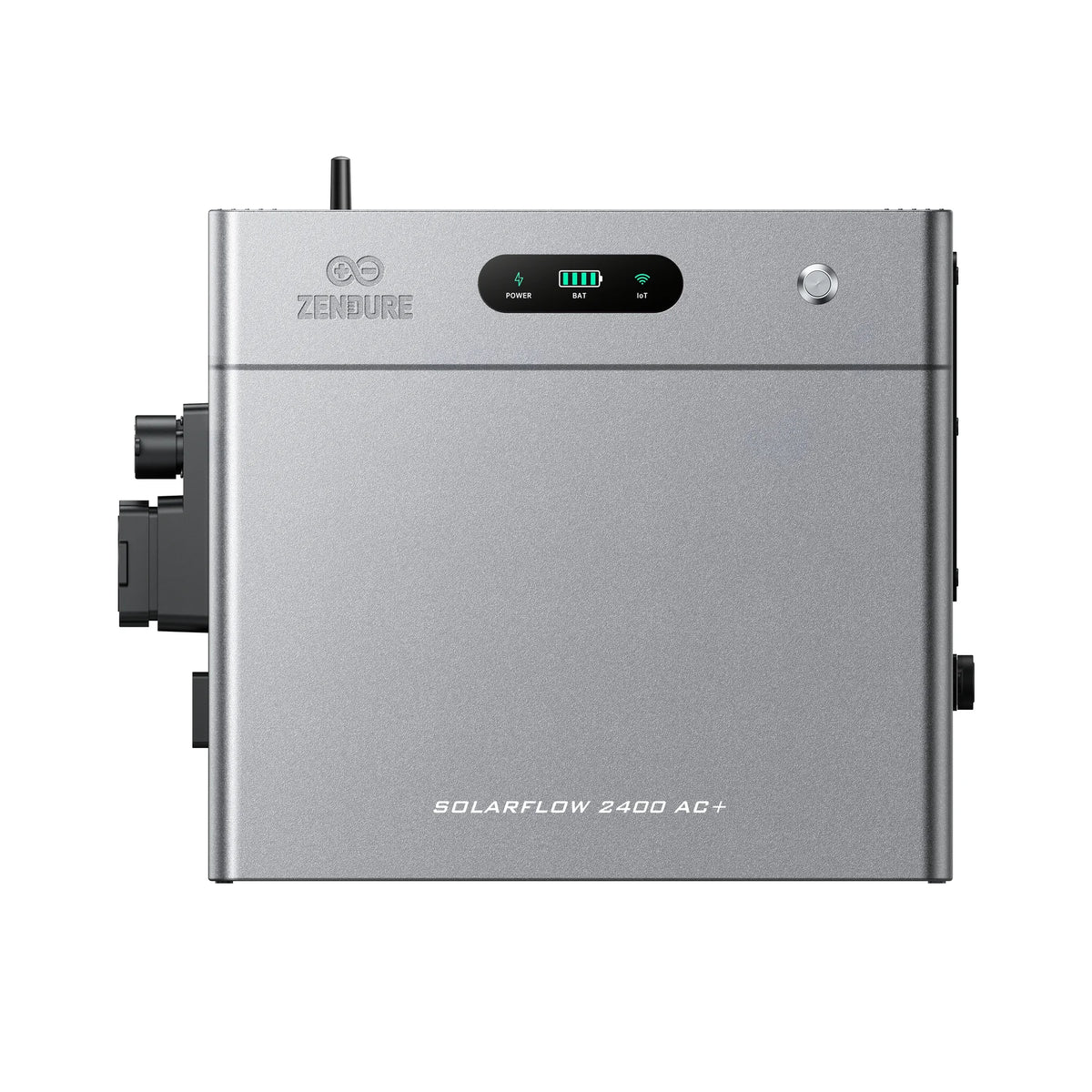

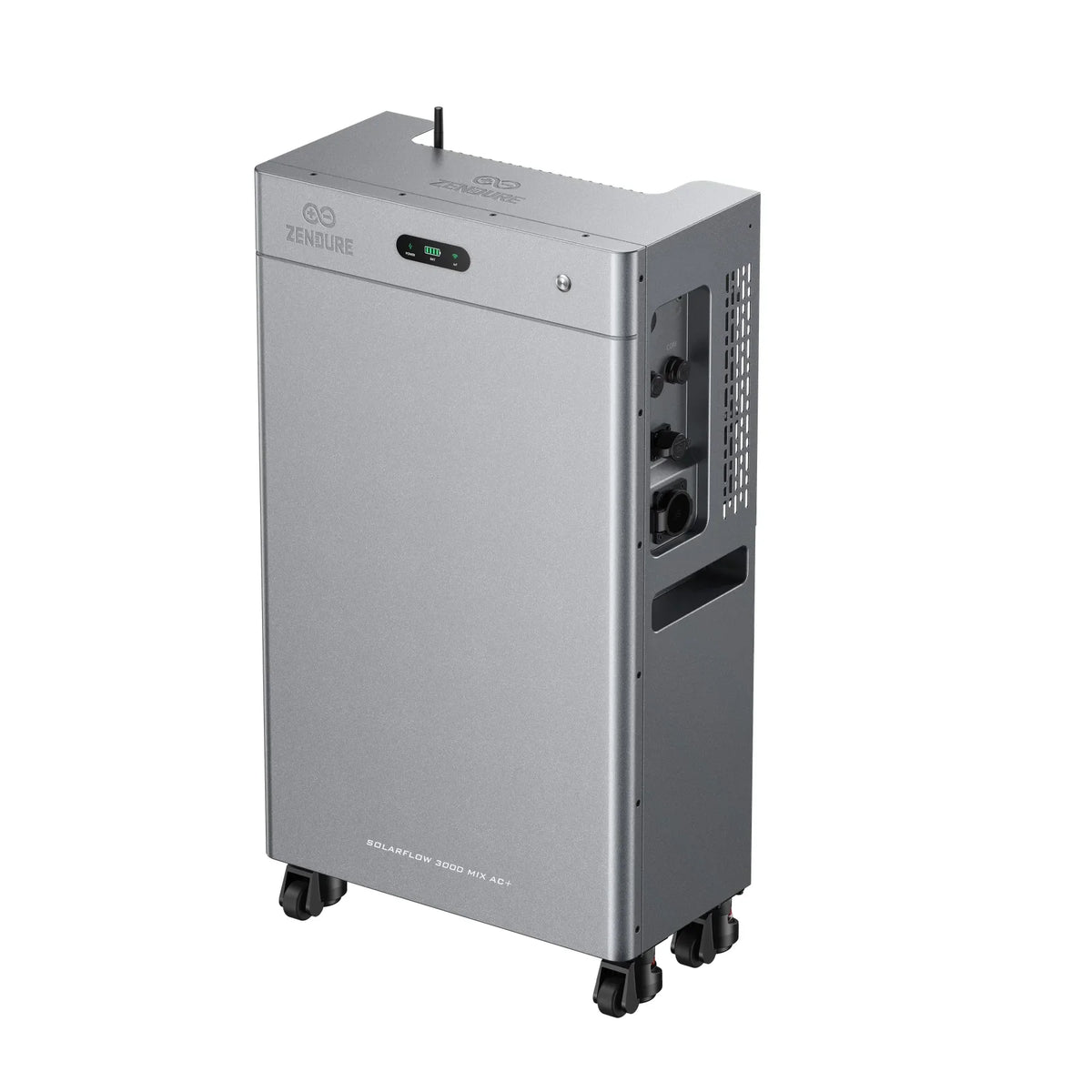

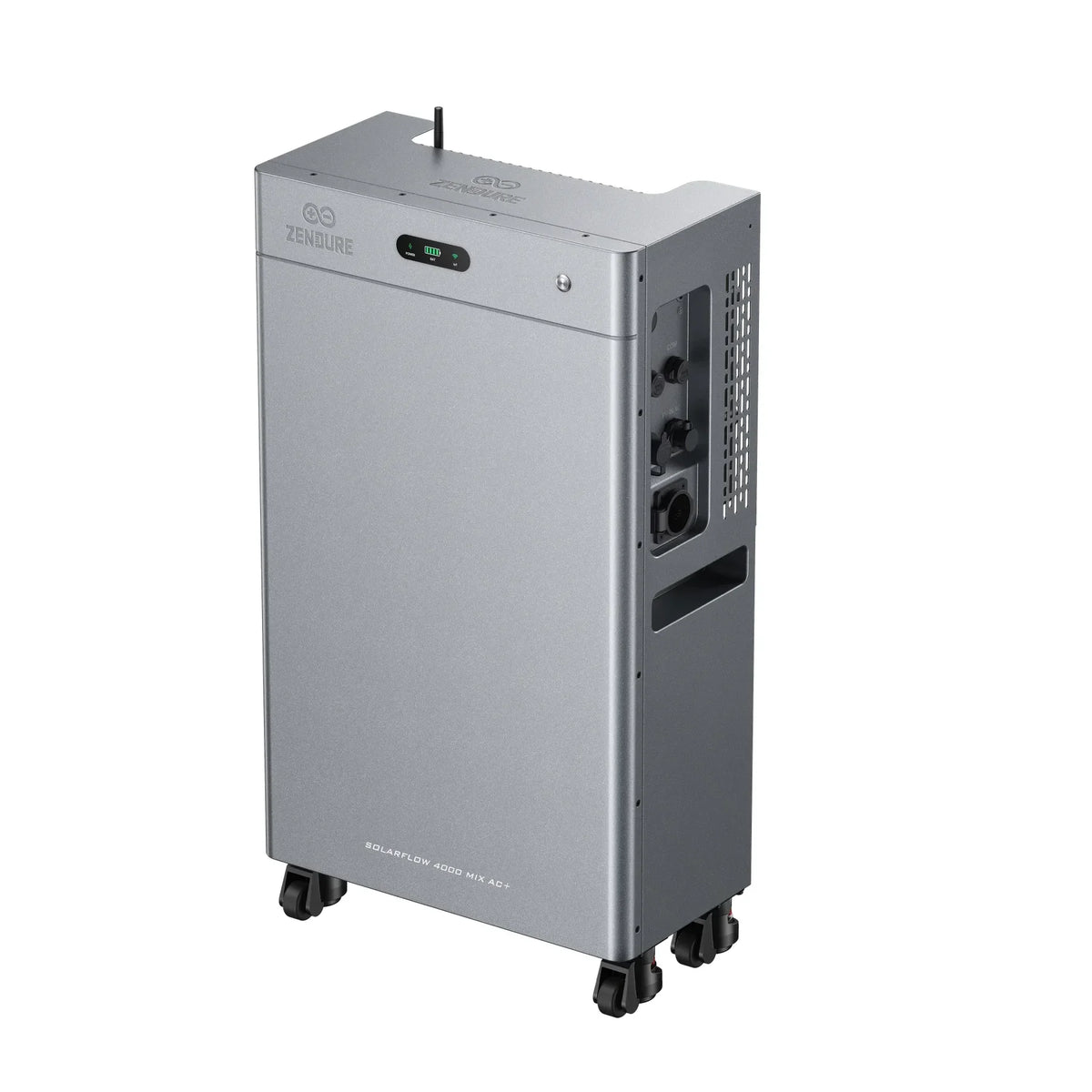


Why choose a Zendure home battery?
There are several good reasons to choose a Zendure home battery. First of all, Zendure's systems have a modular design, which means you can easily expand the storage capacity later as your energy needs grow. This makes a Zendure battery especially future-proof and ideal for anyone who wants to start compact now and scale up later. On top of that, the systems are designed to be efficient: the round-trip efficiency ensures that a large part of the stored energy is actually usable.
Zendure works well with dynamic energy contracts, so you can charge when electricity prices are low and discharge when prices rise. The Zendure Solarflow home battery also helps reduce feed-in to the grid, which is relevant now that the net-metering scheme is being phased out step by step. What's more, some systems offer a backup function, so you're still powered during an outage. In short: a smart, connected and sustainable choice for any household that wants to use energy more consciously.
Types of Zendure batteries
Zendure offers various home batteries, each tailored to a different situation or energy need. Below you'll find the main variants with an explanation per type.
Zendure SolarFlow
The Zendure SolarFlow is a compact and flexible storage system designed specifically for use in combination with solar panels on your balcony or roof. The system is easy to install and lets you buffer the solar power you generate for use at a later moment. The SolarFlow line is modularly expandable: you start with a base unit and add battery modules as your storage needs grow. Thanks to the digital app integration, you can easily monitor consumption and storage remotely, which makes the system especially user-friendly.
Zendure AIO (All-in-One) systems
The Zendure AIO series combines an inverter and battery storage in one compact device, which considerably simplifies the installation process. This type of home battery is suitable for households looking for a complete solution without separate components. The AIO systems are hybrid in nature: they can be charged both during the day via solar panels and via the power grid. Thanks to the integrated smart control, the system independently optimises the energy management within your home.
Zendure expandable battery modules
In addition to complete systems, Zendure also offers individual battery modules with which you can expand an existing system. This is ideal if you want to increase your storage capacity step by step without immediately purchasing a completely new system. The modules are mutually compatible and connect to the existing Zendure infrastructure, which makes them scalable and cost-efficient. For households with growing energy needs, for example due to the purchase of an electric vehicle or a charging station, this is a practical and affordable way to adjust capacity.
Who is a Zendure home battery suitable for?
A Zendure home battery is widely applicable and fits a range of situations. Below you'll see which target groups will find a Zendure home battery most valuable.
- Solar panel owners: you generate more during the day than you use and want to store that energy for use in the evening or at night, instead of feeding it back to the grid for a lower compensation.
- Households with a dynamic energy contract: you want to benefit from low electricity rates by smartly charging and discharging based on variable prices.
- Homeowners who want to lower energy costs: you're looking for a reliable way to increase your self-consumption and be less dependent on the power grid.
- EV owners: you want to combine the home battery with a charging station to charge your electric vehicle with your own self-generated solar power.
- Technically interested users and smart home owners: you want full control over your energy management via an app or digital dashboard.
- Consumers who want a future-proof home: you want to install a compact solution now with the option to expand modularly later.
In short: whether you primarily want to save money, live more sustainably or simply want more control over your energy consumption, there's a Zendure home battery that fits your situation.
How does a Zendure home battery work?
A Zendure home battery works by storing energy at the moment more is generated or purchased than is directly used. That energy can then be discharged as soon as demand in the home rises, for example in the evening or on cloudy days. The heart of the system is the battery management system, which continuously controls the charge and discharge cycles, monitors the temperature and keeps performance stable.
An inverter handles the conversion between direct current (DC) from the battery and alternating current (AC) for use in the home. What sets Zendure apart from many other home batteries is the combination of modular design, smart control via an app and the ability to integrate with dynamic rates and solar panels. This makes the system not only efficient in daily use, but also flexibly adaptable to changing circumstances. The required installation differs per model and the power you want to use. Some Zendure systems can be used plug-and-play, while higher power levels, fixed connections and PowerHub installations have to be connected by an installer.
Buy a Zendure home battery at TechPunt?
Are you ready to make the switch to smart, sustainable energy storage? At TechPunt you've come to the right place to purchase a Zendure home battery. We offer a carefully selected range of Zendure batteries, from compact SolarFlow systems to expandable modules, all with the lowest price guarantee and fast delivery from our warehouse in Barneveld.
Do you have questions about which system best fits your situation? Our product specialists are happy to help, so you make a choice that suits your home, energy needs and budget. View our range below and order your Zendure home battery today.
FAQ about Zendure home batteries
Is Zendure a good home battery?
Is Zendure a good home battery?
Yes, Zendure is widely regarded as a high-quality brand within the home battery market. The systems combine a modular design, smart energy management and user-friendly app integration. The built-in battery management system ensures stable performance and a long lifespan. Zendure scores well in terms of expandability, efficiency and compatibility with solar panels and dynamic energy contracts, making it a popular choice among both private homeowners and tech-savvy users.
Why choose a Zendure home battery?
Why choose a Zendure home battery?
A Zendure home battery is a smart choice if you want to increase your self-consumption, lower your energy costs or become less dependent on the grid. The systems are modular and scalable, so you can start with a compact solution and expand later. On top of that, they can be used in hybrid setups, work well with solar panels and charging stations, and give you full insight into your energy management via an app. For anyone who wants a future-proof home, a Zendure home battery is a reliable and flexible investment.
How much does a Zendure home battery cost?
How much does a Zendure home battery cost?
The price of a Zendure home battery varies depending on the model, the storage capacity and any additional modules. Compact entry-level models like the SolarFlow are available in a lower price range, while larger all-in-one systems with more capacity are priced higher. At Techpunt you benefit from the lowest price guarantee, so you can be sure you're paying a fair price. View the current prices in our range for a transparent overview per model.
How much storage capacity do Zendure home batteries have?
How much storage capacity do Zendure home batteries have?
This varies a lot from one series to another. The compact SolarFlow models start at around 2 kWh, while the SolarFlow 3000 Mix AC+ and 4000 Mix AC+ already come with 8 kWh of storage as standard. On top of that, the 4000 Mix AC+ can be expanded up to a maximum of 50 kWh. That means Zendure now has solutions for both small installations and homes with high energy consumption.
Related Blog Articles

Where to place a home battery: the best spot in and around your house
You install a home battery in a dry, cool and ventilated space outside your living space and outside your escape route, such as a shed, garage or utility room. The fire brigade calls the shed the most fire-safe spot, with the garage and the attic as alternatives. Below you can read, per space, what works, what you're better off avoiding and what a battery needs. Where is the best place to install a home battery? It's best to install a home battery in a separate space that is dry, cool and well ventilated and that can be reached from the outside. Which space suits you also depends on the model, because home batteries vary quite a bit in weight, housing and the way they're connected. The Netherlands Institute for Public Safety (NIPV) advises against placing a home battery in living and residential areas, and instead recommends a space that emergency services can reach from the outside. In most homes that leaves you with four spots: the shed, the garage, the utility room and the attic. A battery of just over 20 kilos is easier to get into the attic than a complete unit of around 80 kilos. Where can you install a home battery according to the fire brigade? According to the fire brigade, you may install a home battery in a cool, ventilated spot outside your escape route, on or against a non-combustible surface. The fire brigade has separate advice for fixed home batteries and for plug-in batteries, but the requirements for the spot largely overlap: Escape route: don't place the battery in the hallway, on the landing or under the stairs, so smoke won't block your way out. Detector: hang a working smoke detector in the same space; for a battery the fire brigade also recommends a CO detector. Surface: mount the battery on or against a non-combustible surface, such as a brick wall or a non-combustible base plate. Clear space: keep the area around it clear, don't put anything on top of the battery and don't place it under furniture, near the heating or in direct sunlight. Accessibility: choose a spot that you and the emergency services can reach easily. Stability: avoid spots where the battery can get wet, tip over or where you'll quickly bump into it. These requirements apply to every space covered below. If a spot fails on even one point, like a battery under the stairs, then look for another space, even if there's plenty of room. Installing a home battery per space in and around your home Installing a home battery is different in each space, because temperature, accessibility and the distance to your living space all vary. Below you'll find the spaces that work in most homes and the spaces you're better off skipping. The attic gets its own explanation further down. Installing a home battery in the shed According to the fire department, installing a home battery in the shed is the most fire-safe choice. A shed stands separate from your home, is often cool and well ventilated, and the fire department can reach it directly from outside. Do have an installer assess whether the power cable to the shed can handle the battery's capacity. A detached shed is usually unheated, so choose a model that can handle the winter temperature and mount a smoke detector there. Installing a home battery in the garage Installing a home battery in the garage is a good alternative if you don't have a shed. A garage isn't an occupied space and often has its own door to the outside. Place the battery somewhere you won't bump into it with your car or bike. In an unheated garage, the winter temperature matters: according to the manufacturer, the Zendure SolarFlow Mix models and the Anker SOLIX Solarbank Max AC work down to -20 °C, but a Zendure battery only charges above 0 °C and first warms itself up with power in freezing conditions. Installing a home battery in the utility room Installing a home battery in the utility room or storage room is possible, as long as that space isn't your escape route. A utility room doesn't count as a living or occupied space and often has its own exterior door, which fits the NIPV advice for a space that's accessible from outside. If your only exit runs through the utility room, or the outlet is on the same circuit as the washing machine, then choose a different spot or a different outlet. Can a home battery go in the meter cupboard? No, a home battery doesn't belong in the meter cupboard, because most meter cupboards are too small and located near the front door. That spot therefore falls within your escape route, and the fire department advises against a battery there. The meter cupboard does play a role: that's where the circuit the battery is connected to sits, and according to the fire department that's where you mark that there's a home battery in the house, along with the supplier's number. Why not put a home battery in the basement? Installing a home battery in the basement is not recommended, because according to the NIPV, in the event of a defect flammable gases can actually build up in an enclosed space like a basement. A basement is also hard to reach for emergency services and often damp. That makes the basement unsuitable, even if the temperature stays stable there all year round. The same consideration applies to a crawl space. Why not put a home battery in the living room? A home battery in the living room or bedroom doesn't fit the advice from the NIPV, which rules out living and occupied spaces. Those are the spaces where you spend most of your time, including when you sleep, and a battery in a separate space gives you distance and time. The fire department also opts for a separate space like a shed or garage, rather than the place where you sit every day. Can you install a home battery in the attic? Yes, you can place a home battery in the attic, as long as you take heat, weight and accessibility into account. The fire department mentions the attic as an alternative for a fixed home battery if you don't have a shed or garage. For a home battery with a plug, the fire department prefers the ground floor, because the battery is more accessible there. Heat is the first thing to consider. An attic under the roof heats up considerably in summer, while most models at TechPunt work up to 55 °C according to the manufacturers. An insulated and ventilated attic keeps the temperature more stable than an attic without insulation. Weight is the second point. A Zendure SolarFlow Mix unit weighs around 80 kilos and an Anker SOLIX Solarbank Max AC 63 kilos, even without extra batteries. That unit has to go up the stairs and the attic floor has to carry the weight. A modular set, like the Zendure SolarFlow 800 Plus at just over 21 kilos with separate expansion batteries, you build up module by module in the attic. Finally, don't put the battery near the attic stairs, because those stairs are your escape route downstairs, and here too hang a smoke detector in the same room. Place a home battery indoors or outdoors? In principle you place a home battery indoors or in an enclosed outbuilding such as a shed or garage. There the battery stays dry, out of direct sunlight and at a more stable temperature, and those are exactly the points the fire department mentions for the location. Placing it outside is only possible with a model the manufacturer approves for that. Zendure and Anker SOLIX describe their models with an IP65 or IP66 enclosure as suitable for indoors and for a sheltered spot outside, so even then you choose a spot out of the rain and direct sunlight. You can read what to watch out for with an outdoor setup in our guide on placing a home battery outside. Where do you place a home battery with a plug? According to the fire department, a home battery with a plug is best placed on the ground floor, in a room with a stable room temperature and close to a free, grounded outlet. So with a plug and play home battery, the outlet partly determines where it goes, because the fire department advises against an extension cord or power strip. Also check the circuit in the meter cupboard that the outlet is connected to. The fire department recommends a maximum of one home battery per circuit and no circuit shared with heavy appliances like the washing machine; a separate circuit is preferred. If the only suitable outlet is on a full circuit, choose a different spot or have an installer set up a separate circuit. How far can a home battery be from the meter cupboard? A home battery may sit some distance from the meter cupboard, as long as the power cable and the data signal can bridge that distance. In practice, the cable length of your model and the range of your wifi determine how far you can go. For the power, Anker SOLIX gives you the choice of AC cables of 5 and 15 metres with a Wieland plug and a 15-metre cable with a Schuko plug, so the Solarbank also fits an earthed socket that's further away. A fixed connection on a dedicated circuit goes through an installer, who also assesses whether the cable to a shed or garage can handle the power. You'll find what you need for your setup in the home battery accessories. For the control, the signal matters. A P1 meter on your smart meter, like the Zendure Smart Meter P1, sends your consumption data wirelessly, so the battery knows when to charge or discharge. That's why you should check at your chosen spot whether your wifi is strong enough. Checklist for placing your home battery With this checklist for placing your home battery, you can check in just a few minutes whether a spot is suitable: Room: a shed, garage, utility room or insulated attic, not a living room, bedroom, cellar or crawl space. Escape route: not in the hallway, by the front door, on the landing or under the stairs. Surface: firm, level and non-flammable, and strong enough for the weight of the complete set. Climate: dry, ventilated, out of direct sunlight and within the manufacturer's temperature range. Detector: a working smoke detector in the same room. Power: an earthed socket without an extension cord, on a circuit without heavy appliances. Signal: enough wifi coverage for the app and the P1 meter. Notification: a note in the meter cupboard and a heads-up to your insurer. If every point checks out, you've found a suitable spot for your home battery. If a spot fails on one point, go back through the spaces above once more before choosing an alternative. Which model suits the spot for your home battery? Which model is right depends on where you place your home battery, because every space has different requirements. An unheated garage or shed calls for a battery that can handle frost, an attic for a lightweight modular set that you carry up module by module, and a spot far from the meter cupboard for a long connection cable and good wifi coverage. At TechPunt you can compare all home batteries from Zendure and Anker SOLIX side by side, with an IP65 or IP66 housing, expansion batteries that you build up module by module, and connection cables up to 15 metres. Once you've chosen your model, we'll ship it from our own warehouse in Barneveld.
Read More
A home battery is a large rechargeable battery for your home that stores electricity so you can use it later. The power comes from your solar panels or from the grid, and the battery releases it again the moment you need it. What does a home battery in your house do? A home battery in your house shifts power from the moment it's available to the moment you use it. Solar panels generate most during the middle of the day, while you use the most power in the evening. Without storage, according to Milieu Centraal you use an average of around 30 percent of your solar power yourself and the rest goes to the grid. A home battery captures that surplus and delivers it back to your household later. The battery charges when more power comes in than your home needs and discharges when you use more than is being generated. When it's full, the surplus still goes to the grid. When it's empty, you simply draw power from your energy supplier again. This switching happens automatically, without you having to do anything. What components make up a home battery? A home battery consists of five components that together form one system: Battery modules: blocks of battery cells where the energy is stored, in most home batteries these are lithium iron phosphate cells, abbreviated LFP or LiFePO4. Battery management system (BMS): monitors the cells and keeps temperature, voltage and charge level within safe limits. Inverter: converts the direct current from the battery cells and solar panels into the alternating current of your power sockets, and vice versa. Energy meter: often a P1 meter on the smart meter in your meter cupboard, which measures how much power your home is using or feeding back at any given moment. Software: based on that measurement, it decides when the battery charges and discharges, and you usually control it through an app. Only when these components work together can the battery respond to your usage on its own. Want to know how a home battery works once all these components come together? We'll walk you through it step by step in a separate explainer. What do you use home energy storage for? You use home energy storage for three things: making the most of your own solar power later, saving cheap power from the grid, and keeping your devices running during a power outage. Which use matters most depends on your situation and on the model. 1. Store solar energy for the evening Storing solar energy for the evening is the best-known use of a home battery. The surplus your panels generate during the day gets used after sunset for cooking, lighting and the dishwasher. Without a battery, that surplus goes straight to the grid. 2. Storing cheap grid power in a home battery Storing cheap grid power in a home battery is possible if you have a dynamic energy contract. With such a contract, the electricity price changes by the hour, depending on the market price. The battery then charges during low-price hours and supplies power when it's expensive. You don't need solar panels for this. 3. Home battery as backup power during an outage A home battery as backup power during an outage only works with models that have a separate backup power output. If the grid goes down, such a battery switches over and the devices you connect to that output, like a freezer or your wifi router, keep working. A battery without such an output does not supply power to your home during an outage. What is a plug-in home battery? A plug-in home battery is a home battery that you connect to a power socket with a plug, without needing an installer. The battery supplies its power to your home installation via that circuit. A fixed home battery, on the other hand, is connected in the meter cupboard by an installer, usually on its own circuit. Plug-in systems are often modular: you start with one battery and expand later with extra modules. With the heavier models, you only get the full output with a separate circuit or a fixed connection installed by an electrician. Also keep an eye on what else is on the same circuit, because heavy appliances on that circuit can overload the wiring together with the battery. You can see which models are available in the overview of plug-in home batteries. What are the pros and cons of a home battery? The pros and cons of a home battery are closely balanced: you get more out of your own power, but you pay a hefty investment for it. Here they are at a glance. Benefits of a home battery The benefits of a home battery mainly come down to having more control over your own power: More of your own solar power: you use a larger share of what your panels generate yourself, instead of feeding it back to the grid. Less dependent on the grid: in the evening and at night your home partly runs on stored power. Respond to electricity prices: with a dynamic contract you charge during cheap hours and use power during expensive hours. Less feed-in: you supply less power to the grid, which matters now that many energy providers charge feed-in costs. Expandable: many systems are modular, so you can add capacity as your consumption grows. Power during outages: models with a backup power output keep important appliances running when the grid goes down. How much of those benefits you notice depends on how much electricity you generate, when you use it, and which energy contract you have. Downsides of a home battery The downsides of a home battery lie mainly in the costs and the limits of storage: High purchase price: a home battery is a hefty investment, and whether you'll earn it back isn't certain. Not self-sufficient: in summer you generate more than the battery can store, and in winter too little to fill it, so you'll still need a grid connection. Environmental impact: making a battery takes a lot of energy and raw materials. Placement: the battery needs a well-ventilated spot, away from walkways and escape routes. Wear: the storage capacity slowly decreases after many charge cycles. Whether the benefits outweigh the costs varies from household to household. You can read how to work that out for your own situation in the article about the payback time of a home battery. Why are more and more households choosing a home battery? More and more households are choosing a home battery, because fed-back solar power earns less than it used to. The net metering scheme ends on 1 January 2027. After that, for electricity you feed back you'll only get a payment from your energy supplier, and that's usually lower than what you pay for electricity from the grid. On top of that, many energy suppliers charge feed-in costs, which means feeding back can already cost you money. With a dynamic energy contract, the electricity price varies by the hour. A battery makes those differences useful. Plug-in models that you connect yourself have also made the step to a home battery smaller. Wondering if a home battery is right for you? Curious whether a home battery is right for you? It helps to see the models side by side. In the overview of all home batteries you'll find the home batteries TechPunt carries, and on every product page you can see how much storage and power a model offers. TechPunt sells plug-in home batteries from Zendure and Anker SOLIX and ships them from its own warehouse in Barneveld.
Read More
Home battery warranty: how are you protected if something breaks?
With the warranty on a home battery, you're protected in three ways in the event of a defect: by the law, by the store and by the manufacturer. At TechPunt you get a 2-year warranty on every product, and Zendure and Anker SOLIX offer a 10-year manufacturer's warranty on their home batteries. Below you can read what each form covers, when your warranty expires and how to file a warranty claim. Which types of warranty apply to a home battery? For a home battery, three types of warranty apply alongside each other: the legal warranty, the store's warranty and the manufacturer's warranty. Each form has its own term and its own point of contact: Legal warranty: your right to a product that does what you can reasonably expect from it under normal use. This warranty is free and you arrange it with the seller. TechPunt warranty: 2 years on every product you buy at TechPunt. This warranty covers technical defects, but not damage caused by the user or improper use. Manufacturer's warranty: a voluntary warranty from the brand, also known as a factory warranty. Zendure and Anker SOLIX offer 10 years on their home batteries. The three forms complement each other and don't replace one another. A warranty from the store or the manufacturer doesn't take anything away from your legal rights; that's also stated in TechPunt's terms and conditions. If the store's warranty expires, your legal rights and the manufacturer's warranty simply remain in place. How long is the manufacturer's warranty on a home battery? The manufacturer's warranty on a home battery is 10 years for the battery itself at both Zendure and Anker SOLIX. Shorter terms apply to accessories such as smart meters and cables. Both brands only provide this warranty if you bought the battery through an official channel or an authorized seller, and they ask for proof of purchase when you file a claim. So keep your invoice for as long as the manufacturer's warranty runs. Zendure warranty on the SolarFlow series Within the SolarFlow series, Zendure offers a 10-year warranty on, among others, the SolarFlow 800 Plus and 800 Pro, the 1600 AC+, the 2400 AC, AC+ and Pro, the 3000 Mix AC+, the 4000 Mix AC+ and the 4000 Mix Pro. The AB2000X, AB3000X and AB3000L expansion batteries are also covered by this 10-year warranty. The term starts on the purchase date shown on your invoice. If a condition conflicts with consumer law in your country, then according to Zendure the law takes precedence. You can see which models we carry under the Zendure home batteries. Anker SOLIX warranty on the Solarbank Anker SOLIX gives a 10-year warranty on the Solarbank Max AC, the Solarbank Max and the Solarbank 4 E5000 Pro, and on the BP5000 and BP7000 expansion batteries. With Anker, the term starts on the day of delivery. Anker explicitly calls the warranty an addition to your legal rights, which are therefore not limited by it. You'll find the current range at the Anker SOLIX Solarbanks. Warranty on accessories for your home battery On accessories for your home battery, manufacturers offer a shorter warranty than on the battery itself. Anker SOLIX gives 24 months on the Smart Meter Gen 2, the P1 Meter and the Smart Plug, and 60 months on the Backup Auto-Switch. Zendure states in its warranty conditions 1 year for the accessories of the SolarFlow series. Within the first 2 years, every accessory you buy at TechPunt is also covered by TechPunt's warranty. After that, for an individual accessory, check the term in the manufacturer's conditions. How long does the legal warranty on a home battery run? The legal warranty on a home battery runs, in the Netherlands, for as long as you may expect the battery to work under normal use, and in Belgium 2 years after delivery. In both countries the seller is your point of contact, not the manufacturer. TechPunt delivers in the Netherlands and Belgium, so below you can read what your rights are per country. Legal warranty in the Netherlands The legal warranty in the Netherlands has no fixed term: a product has to last as long as you may reasonably expect. What's reasonable depends on things like the product, the price and what the manufacturer promises about its lifespan. So a seller cannot reject a legitimate complaint with the argument that the warranty has expired after 2 years. If a defect arises within one year of delivery, the law assumes it was already present at delivery; the seller then has to prove otherwise. Report a defect within 2 months after you discover it, and you're on time. If repair or replacement isn't possible, you're entitled to a price reduction or, in the case of a defect that isn't minor, to cancellation of the purchase. Legal warranty in Belgium The legal warranty in Belgium is 2 years from delivery. For purchases made on or after 1 June 2022, there is a presumption throughout that entire period that a defect already existed at the time of delivery, meaning the seller has to prove that it did not. During a repair or replacement, the warranty period is suspended. The 10-year manufacturer's warranty comes on top of that as an extra. Is capacity loss covered by a home battery's warranty? Normal capacity loss isn't covered by a home battery's warranty, because every lithium battery holds less energy over time. Anker SOLIX excludes gradual capacity loss as long as it stays within the values from the technical specifications. Zendure lists normal wear as an exclusion and states for the Mix series that the battery still has 70 percent of its original capacity after 10,000 charge cycles. If the capacity drops much faster than the manufacturer states, there may indeed be a defect. Record what you notice, for example with screenshots from your battery's app, and report it to the seller. To learn how quickly a battery normally wears down and what you can do about it yourself, read our blog about the lifespan of a home battery. When does the warranty on a home battery lapse? The warranty on a home battery lapses if the damage is caused by use that deviates from the manual or by an external cause. In their terms, Zendure and Anker SOLIX exclude situations including these: Zendure charging rule: the warranty on the cells lapses if you don't fully charge the battery within 30 days of receiving it and at least every three months thereafter. Zendure recommends doing the first full charge within 7 days. Opening or modifying: opening the housing yourself or having the product modified by anyone other than the manufacturer or an authorized service partner. Wrong accessories: using chargers, cables, or parts that aren't original or don't match your battery. External causes: lightning strikes, power surges, flooding, a drop, or temperatures outside the specifications. Unclear origin: a removed or illegible serial number, no proof of purchase, or a purchase from a seller not authorized by the brand. Scratches and dents that don't affect how the product works also fall outside the manufacturer's warranty. These exclusions are part of the voluntary manufacturer's warranty; your statutory rights remain in place, though those don't cover damage you cause yourself either. TechPunt's warranty likewise doesn't cover user damage or improper use. How do you claim the warranty on a home battery? You claim the warranty on a home battery at the store where you bought it, because that's always the point of contact for your legal rights. If you bought the battery at TechPunt, email info@techpunt.nl with your order number and as detailed a description of the defect as possible. Add photos or a video and note the serial number, because that's what manufacturers ask for with a claim too. For a home battery, TechPunt first contacts the supplier and, based on that, gives you a timeframe for repair or replacement. Most repairs happen on-site; sometimes the battery has to be sent in. Because the handling goes through the supplier, this can take longer than with a small product. If the product is defective, TechPunt covers the return costs and you'll get a return label. You can also submit a claim under the manufacturer's warranty directly with the brand. Zendure accepts claims through the dealer or through its own support, Anker SOLIX via support@ankersolix.com. Keep your order number, proof of purchase, serial number and images of the defect handy. Does the warranty also apply to an expansion battery? The warranty also applies to an expansion battery, with its own term per battery. With Anker SOLIX, the warranty on a BP5000 or BP7000 starts on the delivery date of that module, and with Zendure on the purchase date on the invoice. If you buy an extra battery a year after your base unit, the warranty on that battery also ends a year later. Do pay attention to the combination you choose. Zendure, for example, states that the AB3000L only works with the SolarFlow 2400 AC+ and 2400 Pro, and the AB3000X only with the SolarFlow 2400 AC. Use outside the manufacturer's guidelines isn't covered by the warranty, so check compatibility before you expand. Buy a Home battery with manufacturer's warranty at TechPunt When you buy a Home battery with manufacturer's warranty at TechPunt, you get a 2-year warranty from the store, on top of the 10-year manufacturer's warranty from Zendure or Anker SOLIX. You'll find all models among our home batteries, which we ship from our own warehouse in Barneveld. Within our warranty, we handle contact with the supplier if there's a defect. Not sure which warranty conditions apply to your battery? Ask our customer service your question by phone, email or WhatsApp.
Read More


