



What is a Zendure home battery?
A Zendure home battery is an energy storage system that you can connect to solar panels or the power grid to store energy for later use. The system consists of one or more battery modules combined with an inverter or energy management system. During the day, when your solar panels generate more than you use directly, the home battery stores the surplus power. When demand rises, or when the sun isn't shining, the home battery delivers that stored power straight to your household.
Zendure systems feature intelligent control and an integrated battery management system that monitors the temperature and optimizes performance. Through a dedicated app, you can easily keep an eye on your usage, storage and efficiency, so you always have insight into the flow of energy within your home.
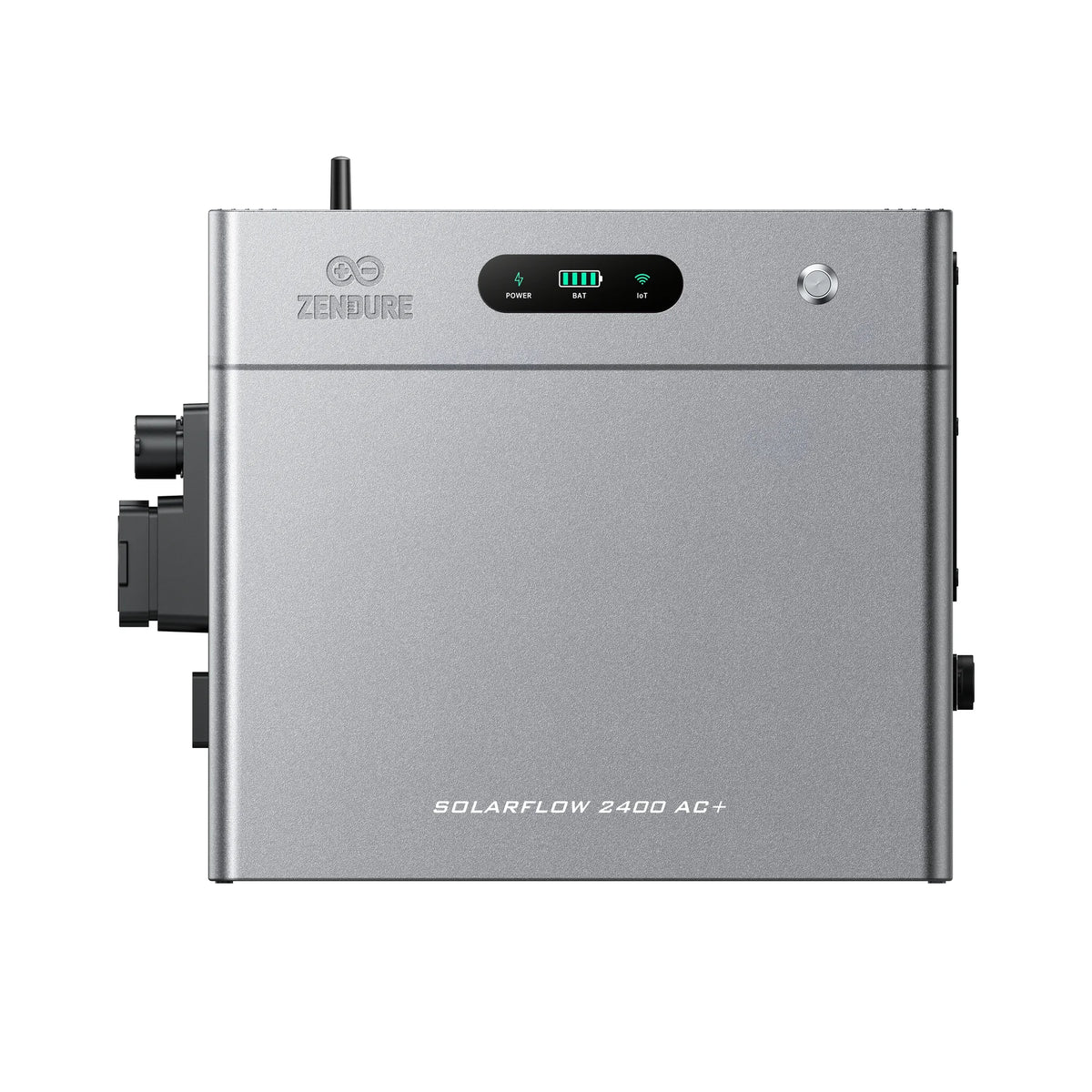
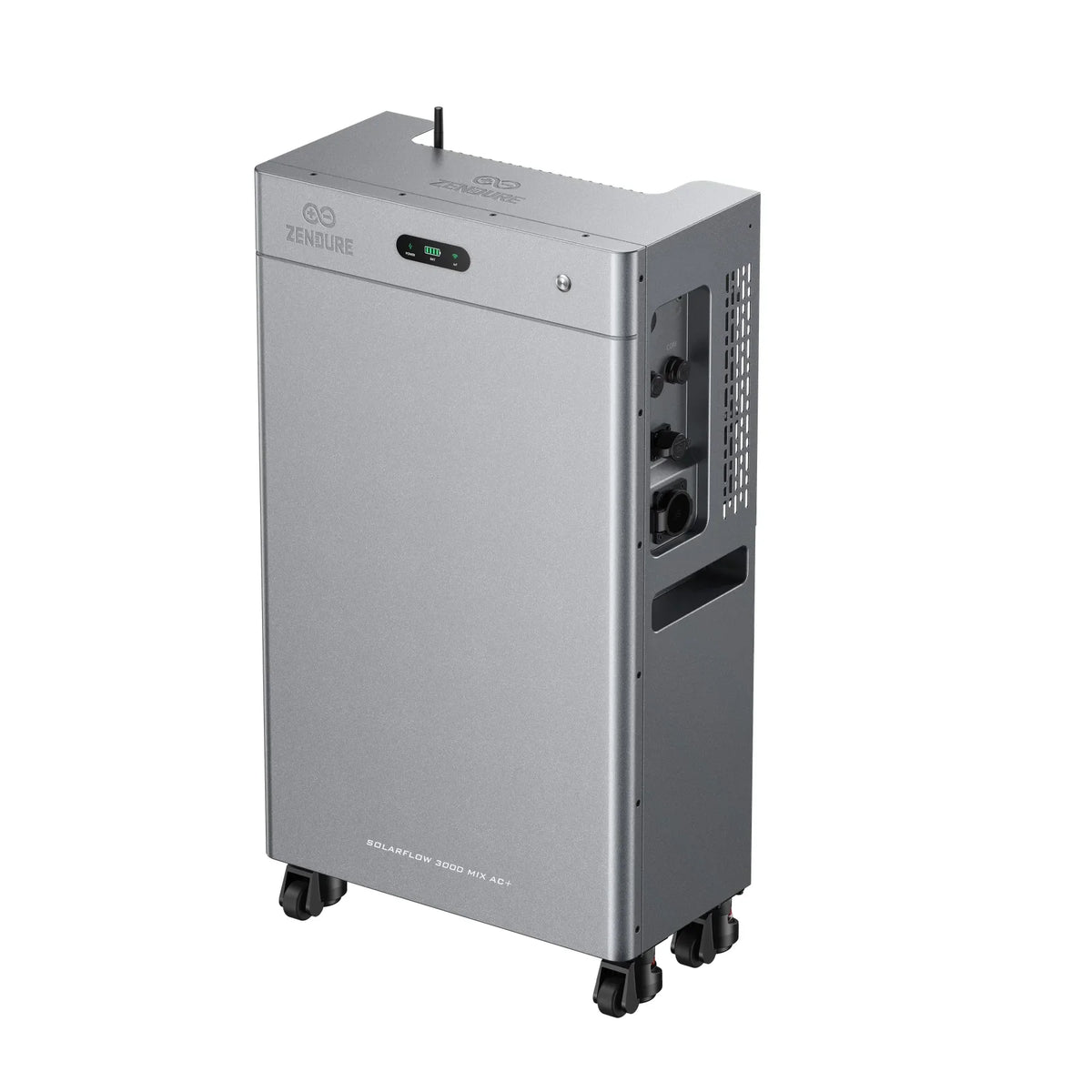
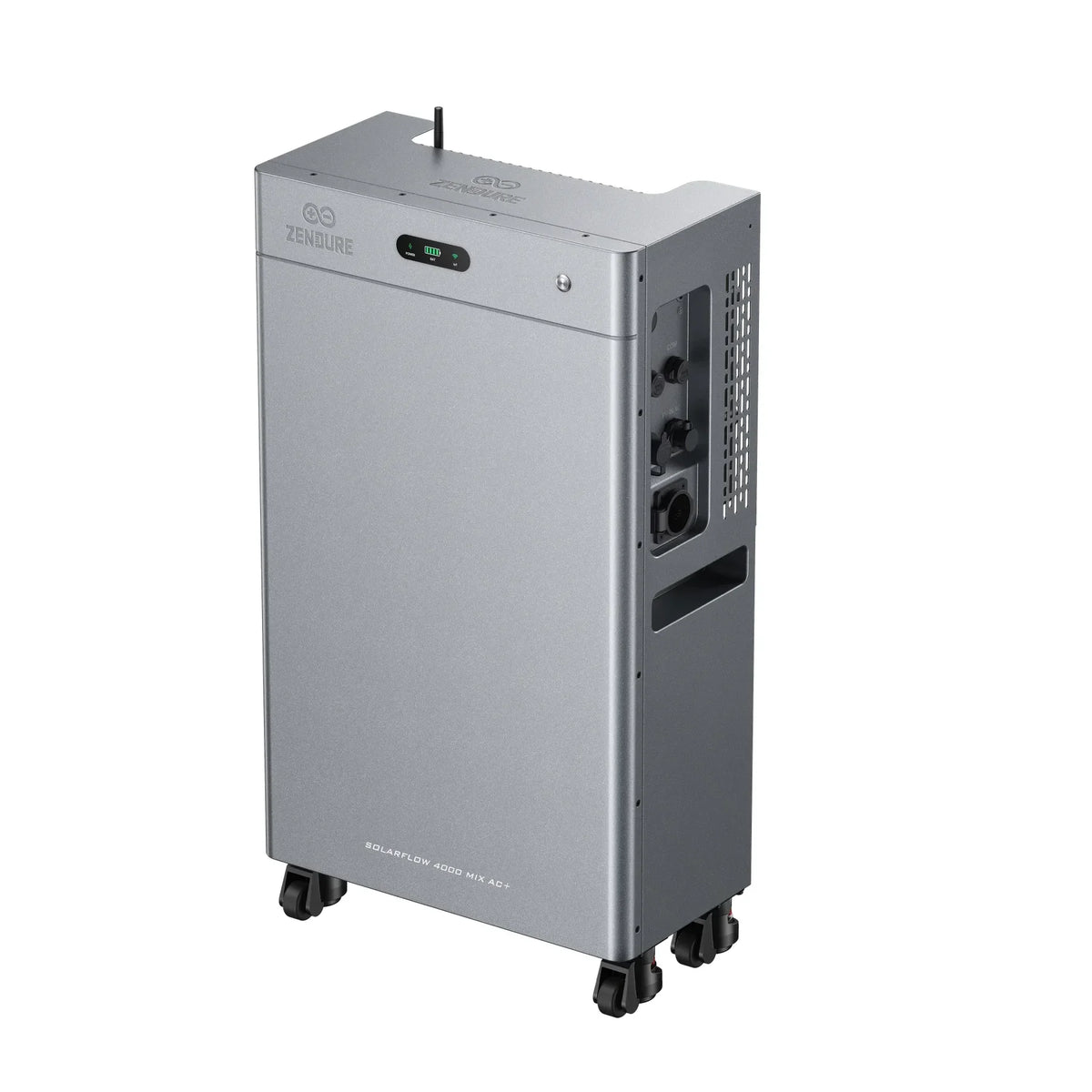
Zendure's best-selling home batteries




Why choose a Zendure home battery?
There are several good reasons to choose a Zendure home battery. First of all, Zendure's systems have a modular design, which means you can easily expand the storage capacity later as your energy needs grow. This makes a Zendure battery especially future-proof and ideal for anyone who wants to start compact now and scale up later. On top of that, the systems are designed to be efficient: the round-trip efficiency ensures that a large part of the stored energy is actually usable.
Zendure works well with dynamic energy contracts, so you can charge when electricity prices are low and discharge when prices rise. The Zendure Solarflow home battery also helps reduce feed-in to the grid, which is relevant now that the net-metering scheme is being phased out step by step. What's more, some systems offer a backup function, so you're still powered during an outage. In short: a smart, connected and sustainable choice for any household that wants to use energy more consciously.
Types of Zendure batteries
Zendure offers various home batteries, each tailored to a different situation or energy need. Below you'll find the main variants with an explanation per type.
Zendure SolarFlow
The Zendure SolarFlow is a compact and flexible storage system designed specifically for use in combination with solar panels on your balcony or roof. The system is easy to install and lets you buffer the solar power you generate for use at a later moment. The SolarFlow line is modularly expandable: you start with a base unit and add battery modules as your storage needs grow. Thanks to the digital app integration, you can easily monitor consumption and storage remotely, which makes the system especially user-friendly.
Zendure AIO (All-in-One) systems
The Zendure AIO series combines an inverter and battery storage in one compact device, which considerably simplifies the installation process. This type of home battery is suitable for households looking for a complete solution without separate components. The AIO systems are hybrid in nature: they can be charged both during the day via solar panels and via the power grid. Thanks to the integrated smart control, the system independently optimises the energy management within your home.
Zendure expandable battery modules
In addition to complete systems, Zendure also offers individual battery modules with which you can expand an existing system. This is ideal if you want to increase your storage capacity step by step without immediately purchasing a completely new system. The modules are mutually compatible and connect to the existing Zendure infrastructure, which makes them scalable and cost-efficient. For households with growing energy needs, for example due to the purchase of an electric vehicle or a charging station, this is a practical and affordable way to adjust capacity.
Who is a Zendure home battery suitable for?
A Zendure home battery is widely applicable and fits a range of situations. Below you'll see which target groups will find a Zendure home battery most valuable.
- Solar panel owners: you generate more during the day than you use and want to store that energy for use in the evening or at night, instead of feeding it back to the grid for a lower compensation.
- Households with a dynamic energy contract: you want to benefit from low electricity rates by smartly charging and discharging based on variable prices.
- Homeowners who want to lower energy costs: you're looking for a reliable way to increase your self-consumption and be less dependent on the power grid.
- EV owners: you want to combine the home battery with a charging station to charge your electric vehicle with your own self-generated solar power.
- Technically interested users and smart home owners: you want full control over your energy management via an app or digital dashboard.
- Consumers who want a future-proof home: you want to install a compact solution now with the option to expand modularly later.
In short: whether you primarily want to save money, live more sustainably or simply want more control over your energy consumption, there's a Zendure home battery that fits your situation.
How does a Zendure home battery work?
A Zendure home battery works by storing energy at the moment more is generated or purchased than is directly used. That energy can then be discharged as soon as demand in the home rises, for example in the evening or on cloudy days. The heart of the system is the battery management system, which continuously controls the charge and discharge cycles, monitors the temperature and keeps performance stable.
An inverter handles the conversion between direct current (DC) from the battery and alternating current (AC) for use in the home. What sets Zendure apart from many other home batteries is the combination of modular design, smart control via an app and the ability to integrate with dynamic rates and solar panels. This makes the system not only efficient in daily use, but also flexibly adaptable to changing circumstances. The required installation differs per model and the power you want to use. Some Zendure systems can be used plug-and-play, while higher power levels, fixed connections and PowerHub installations have to be connected by an installer.
Buy a Zendure home battery at TechPunt?
Are you ready to make the switch to smart, sustainable energy storage? At TechPunt you've come to the right place to purchase a Zendure home battery. We offer a carefully selected range of Zendure batteries, from compact SolarFlow systems to expandable modules, all with the lowest price guarantee and fast delivery from our warehouse in Barneveld.
Do you have questions about which system best fits your situation? Our product specialists are happy to help, so you make a choice that suits your home, energy needs and budget. View our range below and order your Zendure home battery today.
FAQ about Zendure home batteries
Is Zendure a good home battery?
Is Zendure a good home battery?
Yes, Zendure is widely regarded as a high-quality brand within the home battery market. The systems combine a modular design, smart energy management and user-friendly app integration. The built-in battery management system ensures stable performance and a long lifespan. Zendure scores well in terms of expandability, efficiency and compatibility with solar panels and dynamic energy contracts, making it a popular choice among both private homeowners and tech-savvy users.
Why choose a Zendure home battery?
Why choose a Zendure home battery?
A Zendure home battery is a smart choice if you want to increase your self-consumption, lower your energy costs or become less dependent on the grid. The systems are modular and scalable, so you can start with a compact solution and expand later. On top of that, they can be used in hybrid setups, work well with solar panels and charging stations, and give you full insight into your energy management via an app. For anyone who wants a future-proof home, a Zendure home battery is a reliable and flexible investment.
How much does a Zendure home battery cost?
How much does a Zendure home battery cost?
The price of a Zendure home battery varies depending on the model, the storage capacity and any additional modules. Compact entry-level models like the SolarFlow are available in a lower price range, while larger all-in-one systems with more capacity are priced higher. At Techpunt you benefit from the lowest price guarantee, so you can be sure you're paying a fair price. View the current prices in our range for a transparent overview per model.
How much storage capacity do Zendure home batteries have?
How much storage capacity do Zendure home batteries have?
This varies a lot from one series to another. The compact SolarFlow models start at around 2 kWh, while the SolarFlow 3000 Mix AC+ and 4000 Mix AC+ already come with 8 kWh of storage as standard. On top of that, the 4000 Mix AC+ can be expanded up to a maximum of 50 kWh. That means Zendure now has solutions for both small installations and homes with high energy consumption.
Related Blog Articles

Which home battery you need lies, for most households, between 3 and 10 kWh of storage, and often above that with a heat pump or electric car. You get the exact number from your own usage, not from a national average. In this buying guide, you calculate step by step which capacity, which power and which connection suit your situation. How do I know which home battery I need? You'll know which home battery you need once you've answered three questions: how much energy you want to store, how much power you want to use at once, and what you connect the battery to. With those answers, you can compare the home batteries in the range on the points that matter to you, instead of on the biggest number on the box. Storage is expressed in kilowatt-hours (kWh), power in kilowatts (kW). Go through the three choices in this order: Capacity: how many kWh you store per day and use yourself later. Power: how many kW the battery can charge and deliver at the same time. Connection: a regular wall socket or a dedicated circuit in the meter cupboard. Always start with the capacity, because it determines the biggest part of what a home battery does for you. How many kWh of home battery do I need? How many kWh of home battery you need is determined by your electricity use in the evening and at night, not by your annual usage. The battery charges during the day with solar power you don't use right away and delivers that power again as soon as your panels stop generating. According to Milieu Centraal, a household with solar panels uses an average of around 30 percent of its own generated electricity directly. With a home battery, that rises to about 60 percent. The capacity determines how large that extra share becomes for you. How do you calculate the capacity of a home battery? You calculate the capacity of a home battery by comparing two numbers: the solar surplus you feed back during the day and your usage between sunset and the next morning. The lower of the two numbers is the capacity you actually use per day. Say your panels have 9 kWh left over on a sunny day and you use 6 kWh in the evening and at night. Then 6 kWh of usable storage is enough. You can read your hourly usage in your energy supplier's app or with a P1 meter, a little box that reads the data from your smart meter. Why isn't a bigger home battery always better? A bigger home battery isn't always better, because you only benefit from capacity that you fill and empty again every day. A battery that structurally stays half full pays for itself more slowly. In winter, the solar surplus is also so small on many days that even a modest battery doesn't get full. The rule of thumb of 1 to 1.5 kWh of storage per kWp of solar panels gives a first direction, but doesn't take your evening consumption into account. If you also charge at cheap moments through a dynamic energy contract, then extra capacity can pay off. How big should a home battery be for your household? How big a home battery should be for your household depends mainly on the number of occupants and on major power users like a heat pump or an electric car. The table below gives guideline values for the capacity; your own evening consumption remains the deciding factor. Household Guideline capacity Notes 1 to 2 people 3 to 6 kWh lighting, cooking and appliances in the evening 3 to 4 people 6 to 10 kWh higher evening consumption from cooking, laundry and screens With a heat pump or electric car 10 kWh or more preferably modular and expandable If you're at the top end of a group, for example a family of four with induction cooking and a dryer, you'll more likely end up with a 15 kWh home battery. If you work from home a lot and already use plenty of solar power directly during the day, then less storage is enough. How many kW of power does your home battery need? Your home battery needs enough power in kW to run the appliances you switch on at the same time. Capacity tells you how much energy fits in it, power how fast that energy can come out. If your kettle, induction hob and washing machine together need more power than the battery delivers, you simply draw the difference from the grid. In Flanders, power plays an extra role. There, the capacity tariff is based on the average of your highest quarter-hour peak per month over the past twelve months. A home battery with enough power can flatten those peaks by stepping in at moments when lots of appliances are running at once. How much power does a home battery deliver through the power outlet? A plug-in home battery delivers a standard power output of 800 watts through the power outlet, including with the Zendure SolarFlow 2400 AC and the Anker SOLIX Solarbank Max AC. On a dedicated circuit in the meter cupboard, that rises to 2,400 watts with the Zendure and 3,500 watts with the Anker. A power output of 800 watts is enough for lighting, fridge, TV and router at the same time, but not for an induction hob at full power. A plug-and-play home battery is therefore an easy way to start; for heavier evening peaks, have an installer set up a dedicated circuit. Which home battery should you choose if your power usage is going to rise? If your power usage is going to rise, choose a modular home battery that you can expand later with extra battery modules. That way you're not paying now for capacity you won't need until a few years from now, for example after getting a heat pump or an electric car. The Zendure SolarFlow 2400 AC works with AB3000X batteries of 2.88 kWh each and grows up to 17.28 kWh with six modules. The Anker SOLIX Solarbank Max AC starts at 7 kWh and can be expanded up to 42 kWh. So when buying, choose a system whose maximum capacity matches your expected usage a few years from now. Which home battery should I choose for backup power? For backup power, choose a home battery with a backup power function and reserve part of the capacity for outages. That reserve isn't available for your daily solar power, so add it to the capacity you've calculated for your evening usage. A plug-in home battery doesn't power your entire house during an outage. Models with a backup power function then supply electricity through a power outlet on the battery itself, where you can plug in your fridge and router, for example. Choosing a home battery with help from TechPunt Choosing a home battery with help from TechPunt starts with your own numbers: your evening usage, your solar surplus and the connection in your meter cupboard. If you're torn between two capacities, or between a plug-in model and a dedicated circuit, our customer service team is happy to help you by phone, email and WhatsApp. We ship the Zendure and Anker SOLIX home batteries from our own warehouse in Barneveld.
Read More
Net metering scheme ends in 2027: here's what changes for you
The net-metering scheme ends on 1 January 2027. From that moment, the electricity you feed back is no longer offset against the electricity you draw; instead, you receive a feed-in tariff for it. Below you'll read exactly what changes, what it means for your energy bill and what you can still do now. What changes about the net-metering scheme in 2027? The net-metering scheme disappears entirely in 2027, all at once and without a gradual phase-out. Through 31 December 2026, net metering works the way you're used to. From 1 January 2027, your energy supplier settles your consumption and your feed-in separately. What stays is the benefit of electricity you generate yourself and use right away: you pay no energy tax, no VAT and no costs to your supplier on it. For everything you draw from the grid, you do pay those. That means the moment you use your solar power suddenly starts to count, and that's where a home battery for your solar panels makes the difference. How does net metering work through 2026? Through 2026, net metering works as an annual settlement: the electricity you feed back to the grid is subtracted from the electricity you draw. If you feed 2,500 kWh back in summer, you can use 2,500 kWh in winter without paying electricity costs, network costs or energy tax on it. Anything you use above that, you simply settle as usual. There are limits, though. You can't net-meter more than you draw from your supplier in the same period, and only small consumers with a small connection are allowed to net-meter. If you feed back more over a full year than you use, you receive a feed-in tariff for that surplus, as stated in your contract. Why is the government scrapping the net-metering scheme? The government is scrapping the net-metering scheme because net metering costs money, and that bill ends up with everyone. Energy companies also raised their electricity prices for households without solar panels, and the government considers that unfair because not everyone can afford panels. On top of that, the government misses out on tax revenue. There's something else at play: the government wants households to use more of their own power directly instead of feeding it back, because that reduces the strain on the electricity grid. And in recent years solar panels have become so much cheaper and more efficient that they remain worthwhile even without the scheme. An earlier bill to gradually phase out the scheme was rejected by the Senate on 13 February 2024; the law that ends net metering all at once did pass on 17 December 2024. What is the feed-in compensation from 2027? From 2027, the feed-in compensation is the amount your energy supplier pays you for every kWh you feed back to the grid. That compensation replaces net metering. Until 1 January 2030 it must be at least 50 percent of the bare supply rate, meaning the electricity rate without energy tax and VAT. Suppliers may offer more than that minimum, and the amount is stated in your contract. With a fixed rate, your supplier may not change the compensation during the term. With a variable rate this can happen at set moments, and with a dynamic rate the compensation moves along with the current electricity price. The ACM (Netherlands Authority for Consumers and Markets) oversees these compensations. What are feed-in costs? Feed-in costs are the costs your energy supplier charges for processing the power you feed back. They're separate from the feed-in compensation and they won't disappear when the net metering scheme ends. Some suppliers charge a fixed amount, others an amount per kWh fed back. Those costs come from two parts: imbalance costs, because the output of solar panels is hard to predict, and higher purchasing costs, because these customers relatively often draw power at expensive moments. The ACM considers it fair that suppliers pass them on, and at the same time points out that the feed-in costs are sometimes higher than the compensation you receive for the power you feed back. So always assess the costs together with the compensation. What do you still earn per year without net metering? Without net metering you'll earn less from your solar panels each year, but they still make you money. Milieu Centraal calculated how much solar panels will save on your final bill each year from 2027 onwards. The outcome is quite a bit lower than you're used to now. Number of panels Purchase costs Average annual return without net metering 6 € 2.500 € 170 8 € 3.200 € 190 10 € 3.800 € 260 How much you get out of it yourself depends mainly on the share of solar power you use directly. After all, every kWh you use yourself is a kWh you don't have to buy, while for every kWh you feed back you only receive the feed-in compensation. What happens to your energy contract when net metering ends? When net metering ends, your energy supplier splits your consumption and your feed-in into two periods: up to and including 31 December 2026, and from 1 January 2027 onwards. The statutory net metering scheme ends on the same date for everyone, and your supplier cannot postpone that date. What applies to you after that depends on your type of contract. Net metering with a fixed contract that crosses the year boundary A fixed contract that runs beyond 1 January 2027 no longer gives you a legal right to net metering. It may be that your contract still grants you that right, so check what has been agreed about it. If your supplier changes the terms of your current contract, that is only allowed if your current terms clearly state why they may do so. In that case, you can also switch to another supplier free of charge. Net metering with a dynamic energy contract With a dynamic energy contract, your feed-in compensation moves with the current electricity price, sometimes by the hour or by the quarter-hour. From 2027 onwards, that means bigger differences between the moments when feeding back pays off and the moments when it barely does. Those who can steer their consumption or storage based on those prices get the most out of it. Are solar panels still worthwhile without the net metering scheme? Even without the net metering scheme, solar panels are still worthwhile. On average they last 25 years and easily pay for themselves within that period, both before and after the scheme ends. The Dutch government confirms this too, and the ACM points to research by Milieu Centraal as its basis. The payback period may turn out to be longer than you calculated based on the old situation. How much longer depends on the price of your installation, the electricity price and how much of your self-generated electricity you use. Turning off or removing your panels won't help with that, because even without net metering every self-used kWh is still worth money. What can you do yourself before net metering ends? Before net metering ends, there are two things you can do that both serve the same goal: increasing the share of solar power you use directly yourself. The first costs you nothing, the second calls for an investment. Which combination suits you depends on your daily rhythm and your energy use. Using more solar power yourself right away Using more solar power yourself right away starts with shifting your power-hungry appliances to the sunny hours. An average household now uses about 30 percent of its solar power itself, and that percentage can already be noticeably increased through a change in habits. These adjustments have the biggest impact: Washing machine and dishwasher: run them during the day instead of in the evening. Electric car: charge it at home at the times your panels are producing. Heat pump or electric water heater: run it around midday. Meter cupboard: through the P1 port, the data connection of your smart meter, you can see live what you generate and feed back to the grid. Power you use yourself doesn't count toward feed-in costs and is free of energy tax and VAT. So every appliance you shift to a sunny moment lowers two items on your bill at once. Storing solar power in a home battery Storing solar power in a home battery boosts your self-consumption further than you can achieve by shifting usage alone. The battery charges when your panels produce more than your home uses at that moment, and releases that power again in the evening. Already have panels on your roof? Then check out the Zendure home battery for existing solar installations category, where you'll find the systems that fit an existing setup. Ready for the end of the net metering scheme? The end of the net metering scheme doesn't change whether solar panels pay off, but it does change when your power is worth the most. Those who use their own solar power from 2027 onward instead of feeding it back to the grid keep the tax benefit that still applies to self-consumption. At TechPunt you'll find home batteries from Anker SOLIX and Zendure, shipped from our own warehouse in Barneveld and backed by a 2-year manufacturer's warranty. Not sure which system suits your meter cupboard and energy use? Get in touch by phone, email or WhatsApp.
Read More
A home battery works by storing power when you have some to spare and releasing it again when you need it. During the day the battery charges with solar power or cheap power from the grid, and in the evening and at night it delivers that power back to your home. An inverter, a battery management system and your smart meter handle that process fully automatically. What is a home battery? A home battery is a rechargeable battery that stores electricity in your home for later use. You'll also often come across the term home storage battery; it means the same thing. You can see which versions are available, for example compact plug-in models or fixed systems in the meter cupboard, in the overview of all home batteries. The reason for getting a home battery is almost always the same: you want to use more of your own power yourself. According to Milieu Centraal, on average you use about 30 percent of the power your solar panels generate directly yourself. The rest goes to the grid, because your panels mainly generate during the day while you use most of your power at other times, such as in the evening. A home battery shifts part of that surplus to the evening. How does a home battery work step by step? A home battery works step by step in a fixed daily cycle of charging, discharging and exchanging with the grid. During the day the battery fills up with power you don't use right away, and in the evening it gives that power back. You don't have to do anything for this yourself: the system continuously measures how much power you generate and use, and adjusts the charging and discharging accordingly. That daily cycle carries even more weight now that net metering is no longer possible from 1 January 2027. For electricity you feed back, you'll then get a payment that, until 2030, amounts to at least 50 percent of the bare supply rate. Every kWh you use yourself then earns you more than a kWh you feed back. How does a home battery charge with solar power? A home battery charges with solar power as soon as your solar panels generate more than your household is using at that moment. If only the fridge is running while the sun is shining brightly, the surplus goes to the battery instead of the grid. Your panels generate direct current, which goes into the battery either directly or via an inverter, depending on the system. The battery keeps charging until it's full or until your usage is higher than your generation again. How does a home battery supply power to your house in the evening? A home battery supplies power to your house in the evening as soon as your consumption is higher than what your solar panels are still generating. At that point the battery discharges: the inverter converts the stored direct current into alternating current for your lighting, TV and cooktop. You won't notice any of this in your home, because the switch between solar power, battery power and grid power happens automatically. Your sockets work exactly as they always do. What does a home battery do when it's full or empty? A home battery that's full simply lets the surplus solar power flow through to the electricity grid. If the battery is empty, you automatically draw power from the grid again, according to Milieu Centraal. So as long as the grid is working, you're never without power, not even when the battery runs out at the end of the evening. The home battery acts as a buffer between your solar panels, your consumption and the grid, not as a replacement for your grid connection. What parts make up a home battery system? A home battery system consists of four parts that work together to store power safely and release it again. In an all-in-one model they sit in a single enclosure. In a modular system you stack separate battery modules on a main unit with the inverter, so you can expand the capacity later. Here are the parts and what they do: Battery cells: store the energy as a chemical charge; according to Milieu Centraal, most home batteries use lithium iron phosphate (LFP) cells, a stable cell type for everyday use in the home. Inverter: converts the direct current (DC) from your solar panels and battery into the alternating current (AC) used by your home and the grid, and vice versa. Battery Management System (BMS): continuously measures the voltage, current and temperature of the cells and prevents them from being overcharged, discharged too deeply, or getting too hot. Energy Management System (EMS): decides when the battery charges and discharges based on your generation, your consumption and, where relevant, the electricity price. These parts work together constantly. The BMS protects the battery cells, the inverter makes the stored power usable for your devices, and the EMS controls the whole system. In many home batteries the inverter is built in, while in others the battery shares the inverter with your solar panels. How does a home battery know when to charge? A home battery knows when to charge because it usually measures, via the P1 port of your smart meter, how much power you draw from and feed back to the grid. When you feed power back, the battery starts charging. When you draw power, the battery discharges as much as your home needs at that moment, up to its maximum discharge power. That measurement runs through a P1 meter that you plug into the P1 port of your smart meter, like the Zendure Smart Meter P1. The energy management system uses that data to control the battery. If you have a dynamic energy contract, the system also takes the fluctuating electricity prices into account. A home battery's capacity versus power When it comes to a home battery's capacity versus power, you're dealing with two values that together determine what the battery can do. Capacity tells you how much energy fits inside, power tells you how fast that energy can go in or out. According to Milieu Centraal, the capacity of home batteries ranges from roughly 2 to 20 kWh, with an average around 6 kWh. Here's a quick overview of the terms: Capacity (kWh): the amount of energy the battery can store, which determines how long you can run on battery power. Charging power (kW): the speed at which the battery charges, which determines how much solar power it captures on a sunny afternoon. Discharge power (kW): the amount of power the battery can deliver at once, which determines how many devices can run on battery power simultaneously. A battery with lots of capacity but a low discharge power covers a long evening of light usage just fine, but won't handle a peak from a kettle and a hob running at the same time. If your home needs more power than the battery delivers, the grid automatically makes up the difference. How does a home battery work with solar panels? A home battery works with solar panels via either an AC coupling or a DC coupling. The difference lies in where the battery connects to your installation and in how many times the power gets converted. The coupling determines whether your existing inverter can stay in place and how much energy is lost during storage. If you already have solar panels, that's the first question to answer. An AC-coupled home battery An AC-coupled home battery has its own built-in inverter and connects to the alternating current side of your installation. That means your existing inverter for the solar panels simply stays in place. The power does get converted more often: to alternating current in your solar panels' inverter, back to direct current in the battery, and to alternating current again when discharging. That costs a little energy, but makes the battery suitable for almost any existing solar installation. A DC-coupled home battery A DC-coupled home battery shares one inverter with your solar panels and stores the panels' direct current right away. Because the power is converted less often, less energy is lost. On the other hand, you usually need a hybrid inverter that can handle both the panels and the battery. With an existing installation, that often means a new inverter, which makes DC coupling especially interesting for a new installation. How does a home battery with a plug work? A home battery with a plug works the same way as a fixed home battery, except you connect it through a power outlet instead of its own circuit in the meter cupboard. A plug-in home battery charges with power from your solar panels or the grid and feeds it back to your home installation through that same outlet. For a plug-in system, you usually need the following: Power outlet: an earthed outlet on a circuit without other heavy appliances. Smart meter: a meter with a P1 port, read out by the system's P1 meter. App: a connection via wifi or bluetooth to set up and monitor the battery. Registration: a notification to your grid operator via Energieleveren.nl at a power of 0.8 kW or more. Milieu Centraal points out that with a plug-in battery, power can come to one circuit from two directions, from the grid and from the battery, without the fuse stepping in. If a washing machine or dryer is also on the same circuit, the wiring can get too hot. If you're unsure about your fuse box, have an installer take a look. Does a home battery work without solar panels? Yes, a home battery works without solar panels too. The battery then charges with power from the grid instead of with your own solar energy. That's especially interesting with a dynamic energy contract, where the electricity price moves with the energy market throughout the day. The battery charges when power is cheap and discharges when the price is high. So a home battery without solar panels shifts your power purchases to cheaper moments. According to Milieu Centraal, some larger batteries can also feed power back to the grid during expensive moments, letting you take advantage of the price differences. Does a home battery work during a power outage? A home battery doesn't work automatically during a power outage. A regular grid-connected battery switches off as soon as the grid goes down, even if it's full. That shutdown prevents voltage reaching the grid while technicians are fixing a fault. So for a standard system, how full your battery is at that moment makes no difference. If you want to keep power during an outage, you'll need a home battery with backup power. A system with a backup power function disconnects your home, or part of it, from the grid and feeds it from the battery. How long that lasts depends on the battery's charge and on the devices you keep running. Does a home battery make you self-sufficient? No, a home battery doesn't make you self-sufficient, not even combined with solar panels. Milieu Centraal does the math with 10 solar panels, which together generate roughly 3,500 kWh per year. On an average June day, those panels deliver about 15 kWh, more than an average 6 kWh home battery can store. On an average December day that's about 2.5 kWh, too little to fill the battery. So you'll still depend on your grid connection: in summer for the surplus, in winter for the shortfall. What a home battery does do is keep more of your own solar power in the house. That way, you draw less power from the grid at the moments your panels aren't generating anything. Choosing a home battery at TechPunt Choosing a home battery at TechPunt starts with how you want to use it: for more of your own solar power, to charge during cheap moments, or as a buffer during power outages. Our range includes plug-in home batteries from Zendure and Anker SOLIX, modular systems from Zendure, and the smart meters to control them. Every home battery ships from our own warehouse in Barneveld, with a 2-year manufacturer's warranty. Take your time comparing the systems on capacity, power and coupling. Not sure which system suits your installation? Get in touch with our customer service by phone, email or WhatsApp.
Read More


